Categories
Uncategorized

Best Institute for Artificial Intelligence

Best Institute for Artificial Intelligence

Introduction to Artificial Intelligence at AIITECH IT Education

Artificial Intelligence (AI) isn’t just a futuristic concept; it has become an integral part of our daily lives. At AIITECH IT Education, we actively equip you with the knowledge and tools necessary to thrive in the rapidly evolving world of AI. Whether you’re eager to break into the field or looking to advance your existing skills, our programs are specifically designed to guide you every step of the way.

As you embark on this journey, you’ll discover how AI transforms various industries and enhances everyday experiences. With our hands-on training and expert-led courses, you will gain practical skills and insights that prepare you for real-world challenges. Join us at AIITECH, and let’s explore the exciting realm of Artificial Intelligence together!

What is Artificial Intelligence?

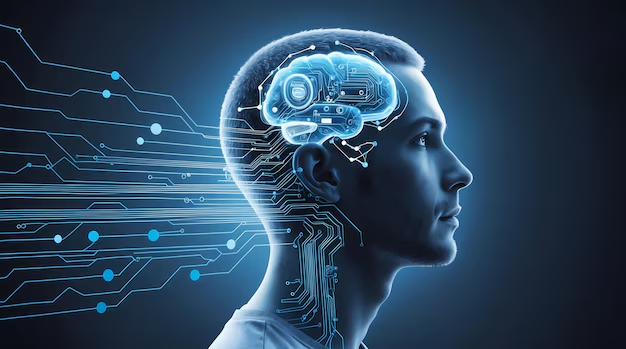
In simple terms, artificial intelligence refers to the ability of machines and software to mimic human intelligence. Essentially, it involves creating algorithms and systems that can actively perform tasks such as learning from data, recognizing patterns, solving problems, and even understanding language. For instance, when you interact with voice assistants like Siri or receive personalized suggestions from Netflix, you’re experiencing AI in action. Clearly, Artificial intelligence has woven itself into nearly every aspect of modern life, enhancing convenience and efficiency in ways we often take for granted.

How AI is Shaping the Future

Artificial intelligence isn’t just a buzzword; it’s actively reshaping industries across the globe. Companies are leveraging Artificial intelligence to automate tasks, enhance customer experiences, and make more informed decisions. For example, healthcare providers now utilize AI to diagnose diseases more accurately, while businesses depend on it to forecast market trends and stay ahead of the competition. As AI continues to advance, its potential to transform the way we work, learn, and interact grows exponentially. Clearly, the future of AI holds limitless possibilities that can redefine our daily lives.

How AI Works: The Core Concepts

To truly grasp AI, you need to understand the key technologies that drive it. Let’s dive into the essential building blocks:

Machine Learning

Machine learning stands out as one of the primary methods through which Artificial intelligence systems learn from data. Instead of requiring explicit programming for every task, these systems actively “learn” by analyzing patterns in data and making predictions based on that information. This approach enables them to adapt and improve over time, making machine learning a cornerstone of modern AI development.

Neural Networks

Next, we have neural networks, which consist of algorithms modeled after the human brain. These networks play a crucial role in helping AI systems recognize patterns and interpret complex data. For example, they excel in tasks such as image recognition and language translation, effectively making sense of information in ways that mimic human cognition.

Natural Language Processing (NLP)

Natural Language Processing (NLP) is another vital component, allowing machines to understand and interact with human language. This technology powers a range of applications, including chatbots, translation tools, and speech recognition software like Siri. By facilitating meaningful communication between humans and machines, NLP significantly enhances our interaction with technology.

Best Institute for Artificial Intelligence

Best AI Technologies Pioneering the Industry

Several key players are driving innovation in AI. Here’s a quick look at some of the most influential AI technologies:

Google AI

Google’s AI projects include everything from machine learning to robotics, and they’re paving the way in areas like autonomous vehicles and healthcare diagnostics.

OpenAI’s GPT Series

OpenAI’s GPT series, including the model you’re interacting with right now, has revolutionized natural language processing, enabling machines to understand and generate human-like text.

IBM Watson

IBM Watson is used in various industries for its powerful data analysis capabilities, from healthcare to business analytics.

AI Programs and Platforms: Key Tools to Know

If you’re interested in pursuing AI, there are several tools and platforms you’ll want to become familiar with:

AI Programming Languages

Python is the most popular language for AI development due to its simplicity and vast range of libraries. Other important languages include R, Java, and C++.

AI Development Tools

Tools like TensorFlow, Keras, and PyTorch make it easier to build, train, and deploy AI models.

AI Software Platforms

AI platforms like Google Cloud AI, Amazon AWS AI, and Microsoft Azure AI offer powerful tools for creating AI-powered applications.

The Role of AI in Business Innovation

AI isn’t just transforming industries; it’s driving innovation within them. Let’s look at how AI is reshaping businesses today:

Automating Processes

AI can automate repetitive tasks, allowing businesses to operate more efficiently. For example, AI-driven systems can manage customer service through chatbots, process large datasets, and even handle payroll.

Enhancing Customer Experiences

AI helps companies deliver more personalized customer experiences, from product recommendations to targeted marketing campaigns.

Driving Data-Driven Decision Making

AI can analyze vast amounts of data quickly and accurately, helping businesses make smarter, data-driven decisions.

AI Development: How Artificial Intelligence is Created

Building AI systems requires a combination of programming, data, and algorithms. Here’s how AI development typically works:

AI Training and Algorithms

AI models are trained using large datasets, allowing them to “learn” and improve over time. The algorithms that drive AI analyze this data, recognize patterns, and make decisions based on that information.

Data Collection and Processing

AI relies on massive amounts of data to function effectively. Developers must collect, process, and refine data to ensure the AI system can learn from it accurately.

Future of AI: Where the Technology is Headed

As AI continues to evolve, we can expect it to play an even larger role in our lives. From autonomous vehicles to AI-driven healthcare innovations, the future of AI holds immense potential to transform the way we live and work.

Conclusion

Artificial intelligence is transforming industries and shaping the future. At AIITECH IT Education, we’re committed to helping you gain the skills and knowledge you need to succeed in this exciting field. Whether you’re a beginner or a seasoned professional, our AI programs are designed to set you on the goal.

Categories
Uncategorized

A Guide to Graphic Design Course

A Guide to Graphic Design Course

Introduction to Graphic Design at AIITECH IT Education

A Guide to Graphic Design Course ,Are you ready to start a creative career that merges art with technology? AIITECH IT Education offers a range of comprehensive graphic design courses to help you master the skills needed to thrive in this fast-paced industry. Whether you’re just starting or want to advance your skills, AIITECH’s programs give you the tools and knowledge necessary to succeed.

What is Graphic Design?

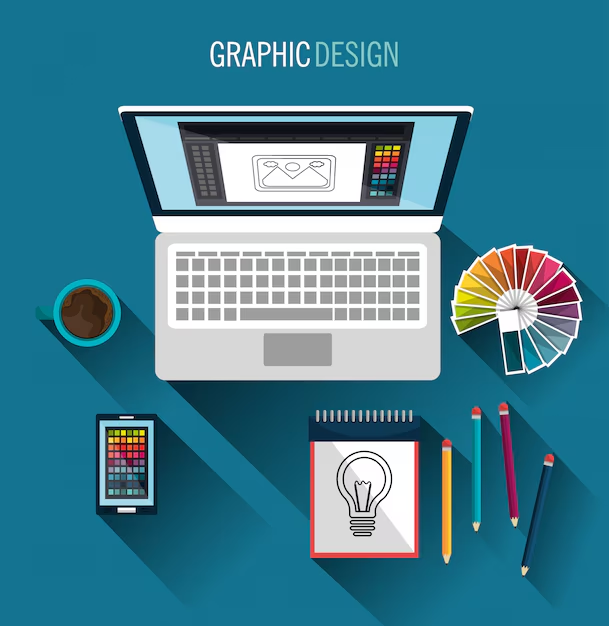
At its core, graphic design is all about creating visually engaging content that communicates a message. It’s not just about making things look good—it’s about solving problems using visual elements like typography, color, and layout. From social media graphics and website design to packaging and logos, graphic designers shape how we interact with information and brands on a daily basis.

Why Graphic Design is Important Today

In today’s digital world, where first impressions matter more than ever, graphic design plays a critical role. Effective design grabs attention, conveys a message clearly, and leaves a lasting impression. Every website you visit, every app you use, and every advertisement you see has been crafted by a graphic designer with the goal of influencing how you perceive a brand or product.

Key Skills Required for a Successful Graphic Designer

If you’re aiming for a career in graphic design, there are a few key skills you’ll need to develop to stand out.

Creativity and Innovation

Graphic design is a field where creativity drives everything. You need to be able to think outside the box and come up with designs that are fresh, engaging, and unique. This creative thinking helps brands capture attention in an increasingly crowded marketplace.

Mastering Design Tools

To bring your ideas to life, you’ll need to become proficient in design software such as Adobe Photoshop, Illustrator, and InDesign. Mastering these tools allows you to create everything from digital artwork to detailed layouts with precision and efficiency.

Communication and Collaboration

Graphic designers often collaborate with clients, marketing teams, and developers. Strong communication skills ensure that you understand project requirements and can effectively translate ideas into visual content. Collaboration helps fine-tune designs to meet both client needs and user expectations.

Overview of Graphic Design Courses at AIITECH IT Education

AIITECH IT Education offers a variety of graphic design courses designed to equip you with both creative and technical skills. Our programs focus on practical, hands-on learning combined with theory, so you graduate not only with knowledge but also a portfolio to showcase your skills.

Instructors and Learning Environment

At AIITECH, you’ll learn from industry professionals who bring real-world experience into the classroom. Our interactive learning environment encourages collaboration and creativity, helping you apply what you learn directly to projects that mimic real-world design challenges.

A Guide to Graphic Design Course

Graphic Design Classes at AIITECH IT Education

Our graphic design classes are structured to give you both theoretical knowledge and practical experience. We focus on building a strong foundation in the essential elements of design.

Course Content and Structure

Classes cover a wide range of topics, starting with the basics and progressing to more complex design principles. Some key areas include:

  • Typography: The art of selecting and arranging text to ensure readability and aesthetic appeal.
  • Color Theory: Learning how different colors work together and the psychological impact they have on viewers.
  • Layout and Composition: Organizing visual elements in a way that draws attention and effectively conveys a message.
  •  

Benefits of Taking a Graphic Design Course

Enrolling in a graphic design course at AIITECH goes beyond just learning new software. Here’s why taking a course can make a real difference in your career:

Building Practical Skills

Our courses are designed to be hands-on, ensuring that you’ll get plenty of practice working on real-world design challenges. You won’t just learn theory—you’ll gain practical skills that can be immediately applied in professional settings.

Networking Opportunities

When you take a course at AIITECH, you join a community of aspiring designers and seasoned professionals. These connections can help you land internships, find job opportunities, and collaborate on projects after you graduate.

What is a Graphic Design Certificate?

A graphic design certificate is an official recognition that verifies your skills and knowledge in the field. AIITECH’s certification programs are designed to prepare you for the workforce by ensuring you have the practical skills employers are looking for.

Importance of Graphic Design Certification

Boosting Career Prospects

Holding a certificate from AIITECH can give you a competitive edge in the job market. Employers recognize that certified designers have completed structured training and are proficient in key design tools and principles.

Validation of Skills and Expertise

A certification not only showcases your design skills but also proves your dedication to continuous learning and development. It’s an excellent way to build credibility with potential employers or clients.

Conclusion

Graphic design is a rewarding career that blends creativity and technology. With AIITECH IT Education’s comprehensive courses and certificate programs, you’ll gain the skills and credentials you need to succeed in this dynamic field. Whether you’re just starting or looking to advance, AIITECH has a course that fits your needs.

FAQs

  1. How long do graphic design courses take? The duration varies depending on the program. Basic courses can take a few months, while advanced certifications may take up to a year.

  2. Do I need any prior experience to enroll in a graphic design course at AIITECH? No, we offer courses for beginners as well as advanced learners.

  3. What job opportunities are available for certified graphic designers? Certified graphic designers can work in branding, web design, UX/UI design, advertising, and more.

  4. Can I take AIITECH’s courses if I work full-time? Yes, our online and part-time course options are designed to fit around your schedule.

  5. How do AIITECH certifications compare to other programs?

Categories
Uncategorized

Best Medical Coding institute in Kerala

Best Medical Coding institute in Kerala

AIITECH IT Education: Best Medical Coding Course

If you’re looking to jumpstart your career in the healthcare industry, a medical coding course is an excellent choice. At AIITECH IT Education, we offer one of the best medical coding courses in Kerala, preparing you for a rewarding and in-demand profession and Let’s explore what makes our course stand out!

What is Medical Coding?

It involves converting healthcare diagnoses, procedures, medical services and equipment into standardized alphanumeric codes. These codes are essential for billing and documentation, ensuring healthcare providers receive accurate reimbursement for their services.

Importance of Medical Coding in Healthcare

Medical coding is crucial in maintaining the financial health of healthcare facilities. Accurate coding helps prevent billing errors, protects against fraud, and ensures compliance with regulations. It’s a field that requires precision and a deep understanding of medical terminology.It involves converting healthcare diagnoses, procedures, medical services, and equipment into standardized alphanumeric codes.specifically, these codes are essential for billing and documentation. Moreover, they ensure that healthcare providers receive accurate reimbursement for their services.in  accurate coding plays a crucial role in maintaining the financial health of healthcare facilities, thereby preventing billing errors and protecting against fraud. Ultimately, effective medical coding is vital for the overall efficiency of the healthcare system.


Best Medical Coding institute in Kerala

Types 

  • Certification Courses: Ideal for beginners, focusing on foundational coding skills.
  • Diploma Courses: More extensive, covering various aspects of medical coding in detail.
  • Online Learning Options: Flexible courses that fit your schedule.

Why Choose Medical Coding as a Career?

Growing Demand for Medical Coders

The healthcare sector is booming, leading to an increased need for skilled medical coders. This demand means ample job opportunities and career stability.

Benefits of a Career in Medical Coding

  • Job Stability: With the healthcare industry’s growth, medical coders are always in demand.
  • Flexibility: Many medical coders have the option to work remotely, providing excellent work-life balance.
  • Competitive Salary: Entry-level salaries can be appealing, with significant earning potential as you gain experience.

Overview of AIITECH

Located in the heart of Kerala, AIITECH has a proven track record of success in IT and healthcare education. Our experienced instructors bring real-world knowledge to the classroom, ensuring you learn from the best.

Unique Features

  • Industry-Relevant Curriculum: Our course content is continuously updated to reflect the latest industry standards and practices.
  • Practical Training: We offer workshops and internships that provide real-world experience.
  • Placement Support: Our dedicated placement cell helps students secure jobs post-graduation.

Course Curriculum at AIITECH

Core Subjects Covered

Our medical coding course includes essential subjects such as:

  • Medical Terminology
  • ICD-10 Coding
  • CPT Coding
  • Healthcare Compliance
  • Billing Procedures

Practical Training Opportunities

Students benefit from hands-on experience through case studies, simulations, and internships, making them job-ready upon completion.

Importance of Certification

Certification is crucial in this  field. It enhances your credibility and demonstrates your expertise to potential employers.

Recognized Certifications

At AIITECH, we prepare our students for several recognized certifications, including:

  • Certified Professional Coder (CPC)
  • Certified Coding Specialist (CCS)
  • Certified Billing and Coding Specialist (CBCS)

Job Opportunities After Completing the Course

Graduates of our medical coding program can find employment in various settings, including hospitals, clinics, and insurance companies.

Potential Employers

  • Hospitals and healthcare facilities
  • Insurance firms
  • Government healthcare agencies

How to Enroll in AIITECH’s Medical Coding Course.

Required Qualifications

A high school diploma is typically required. However, candidates with a background in healthcare or related fields are encouraged to apply.

Conclusion

If you’re ready to take your first step into the thriving field of medical coding, AIITECH IT Education is the place to be. With our comprehensive curriculum, expert faculty, and strong industry connections, we are dedicated to helping you succeed.

Categories
Uncategorized

The Complete Guide to Hospital Administration

The Complete Guide to Hospital Administration

Introduction to Hospital Administration

The Complete Guide to Hospital Administration,Hospital administration is the backbone of any healthcare facility. It involves managing the day-to-day operations of hospitals and other healthcare organizations to ensure they run efficiently. From overseeing budgets and staff to ensuring patient care is at its best, hospital administrators play a pivotal role in the healthcare system. With the global healthcare industry expanding, skilled professionals in this field are in high demand, making hospital administration a rewarding career choice.

Key Responsibilities in Hospital Administration

Hospital administrators are responsible for a wide range of duties that keep healthcare facilities functioning smoothly. Here are some of their primary tasks:

  • Daily operations and management: Administrators handle everything from staffing and scheduling to ensuring that hospital resources are being used effectively.

  • Ensuring patient safety and care quality: A critical aspect of the job is maintaining high standards of patient care, which includes implementing safety protocols and compliance with healthcare regulations.

  • Budgeting and financial oversight: Managing a hospital’s budget, from payroll to purchasing medical equipment, is another key responsibility.

Why Pursue a Career in Hospital Administration?

There are several compelling reasons to pursue a career in hospital administration:

  • Growing demand for healthcare managers: With an aging population and a greater focus on healthcare services, the need for skilled administrators is higher than ever.

  • Diverse career opportunities: Hospital administrators can work in various settings, including hospitals, clinics, nursing homes, and even government health agencies.

  • High earning potential: According to the U.S. Bureau of Labor Statistics, the median annual wage for healthcare administrators is significantly higher than many other industries, reflecting the high level of responsibility and skill required.

Top Skills Required for Hospital Administration

Success in hospital administration depends on a unique blend of skills:

  • Leadership and decision-making: Administrators must lead large teams and make critical decisions that impact both staff and patients.

  • Financial management skills: Managing budgets and ensuring the financial health of a healthcare organization is vital.

  • Communication and interpersonal skills: Working with doctors, nurses, patients, and external partners requires strong communication abilities.

Administration Courses for Healthcare Professionals

There are a variety of courses designed to enhance the skills of healthcare professionals. These include:

  • Healthcare management: Courses that focus on the operational aspects of managing healthcare organizations.

  • Leadership in healthcare: Programs that emphasize leadership skills tailored to healthcare environments.

  • Financial administration in healthcare: These courses teach budgeting, financial planning, and cost control in a healthcare setting.

The Complete Guide to Hospital Administration

Medical Business Administration: A Growing Field

Medical business administration combines healthcare knowledge with business management principles. Unlike hospital management, which focuses primarily on clinical settings, medical business administration involves overseeing the business side of medical practices, such as outpatient clinics or private practices.

Top Administration Training Programs in Healthcare

Several top institutions offer administration training programs. These include:

  • Harvard T.H. Chan School of Public Health: Known for its global health management courses.

  • Johns Hopkins University: Offers a robust online Master’s in Healthcare Administration.

  • University of Michigan: Specializes in healthcare financial management.

Many institutions also offer online programs, which provide flexibility for working professionals.

Benefits of Healthcare Management Courses

Enrolling in healthcare management courses offers numerous benefits:

  • Career advancement: These courses provide the necessary skills to move into higher-level administrative roles.

  • Real-world applications: You’ll learn practical skills that can be immediately applied in your current role, from improving patient care strategies to optimizing hospital workflows.

Popular Business Administration Courses for Healthcare Workers

Healthcare professionals often benefit from business administration courses. These courses cover areas like:

  • Healthcare economics: Understanding the financial dynamics of the healthcare industry.

  • Strategic management: Learning to align business goals with healthcare outcomes.

By combining healthcare expertise with business acumen, these courses prepare professionals to lead organizations more effectively.

The Role of Hospital Management in Modern Healthcare

Hospital management is essential for the smooth operation of healthcare systems. It encompasses everything from facility management to human resources and plays a crucial role in maintaining the quality of care. While hospital administration focuses more on day-to-day operations, hospital management has a broader scope, including long-term strategic planning.

How to Choose the Right Admin Courses for Healthcare

Choosing the right course is critical for career growth. Here’s what you should consider:

  • Accreditation: Ensure the program is accredited by a reputable body.

  • Specialization: Some programs focus on specific areas like financial management or healthcare law.

  • Flexibility: Consider whether the course is available online or requires in-person attendance.

Challenges Faced by Hospital Administrators

Hospital administrators face several challenges, such as:

  • Rising healthcare costs: Balancing quality care with cost control is a constant struggle.

  • Regulatory compliance: Keeping up with changing healthcare regulations can be overwhelming.

  • Staffing issues: Ensuring adequate staffing levels while controlling labor costs is another common challenge.

Future Trends in Hospital Administration

The future of hospital administration is evolving rapidly, with technology playing a key role.

  • Digital healthcare management: Tools like electronic health records (EHRs) and telemedicine are transforming hospital operations.

  • AI and data analytics: These technologies are helping administrators make data-driven decisions that improve efficiency and patient outcomes.

Certifications and Qualifications Needed for Hospital Administration

To excel in hospital administration, obtaining certifications can be beneficial:

  • Certified Healthcare Administrative Professional (CHAP): This certification validates your expertise in managing healthcare facilities.

  • Fellow of the American College of Healthcare Executives (FACHE): A prestigious certification for healthcare managers looking to advance their careers.

These qualifications not only enhance your knowledge but also make you a more competitive candidate in the job market.

Conclusion

In conclusion, hospital administration is a vital and rewarding field that offers diverse career opportunities. Whether you’re interested in managing day-to-day operations, improving patient care, or overseeing hospital finances, a career in healthcare administration can provide both personal fulfillment and professional growth.


FAQs

1. What degree is best for hospital administration? A degree in healthcare management, public health, or business administration with a healthcare focus is ideal.

2. How long does it take to complete a healthcare administration course? It depends on the program, but most master’s degrees in healthcare administration take 1-2 years to complete.

3. Can I switch to hospital administration without a healthcare background? Yes, many programs accept professionals from various backgrounds, especially if they have experience in business or management.

4. Is hospital administration a good career? Yes, hospital administration offers a stable and lucrative career with significant growth opportunities.

5. Are online healthcare administration courses effective? Yes, many reputable institutions offer online programs.

Categories
Uncategorized

DIGITAL MARKETING

BEST DIGITAL MARKETING INSTITUTION IN KERALA

What is Digital Marketing?

Digital marketing refers to the use of online channels, platforms, and technologies to promote products and services and engage with customers. It encompasses a wide range of strategies and tactics aimed at reaching audiences where they spend most of their time: online.


Course Curriculum:

  1. Introduction 

    • Understanding concepts
    • The importance of digital marketing in today’s business landscape
  2. Search Engine Optimization (SEO)

    • Fundamentals of SEO and keyword research
    • On-page optimization techniques (meta tags, content optimization)
    • Off-page SEO strategies (link building, outreach)
    • Tools: Google Analytics, SEMrush, Moz
  3. Content Marketing

    • Developing a content marketing strategy
    • Creating high-quality content for blogs, videos, and infographics
    • Leveraging storytelling to engage your audience
  4. Social Media Marketing

    • Strategies for platforms like Facebook, Instagram, LinkedIn, and Twitter
    • Building and managing brand presence online
    • Creating effective social media ad campaigns
  5. Email Marketing

    • Crafting compelling email campaigns
    • Building and segmenting email lists for targeted marketing
    • Analyzing email performance metrics (open rates, click-through rates)
  6. Pay-Per-Click (PPC) Advertising

    • Understanding Google Ads and Facebook Ads
    • Setting up and optimizing PPC campaigns
    • Tracking ROI and conversion rates
  7. Analytics and Reporting

    • Introduction to Google Analytics and tracking website performance
    • Interpreting data to improve marketing strategies
    • Creating comprehensive reports for stakeholders
  8. Digital Marketing Strategy Development

    • Crafting a complete plan
    • Budgeting and resource allocation for campaigns
    • Staying updated with industry trends and innovatio
DIGITAL MARKETING

Course Features:

  • Hands-On Projects: Engage in real-world projects that provide practical experience.
  • Expert Instructors: Learn from seasoned digital marketing professionals with industry experience.
  • Interactive Learning Environment: Participate in live discussions, Q&A sessions, and peer collaboration.
  • Comprehensive Resources: Gain access to exclusive templates, eBooks, and tools to support your learning.

Who Should Enroll:

  • Marketing professionals aiming to enhance their digital skills
  • Business owners looking to boost their online presence
  • Career changers seeking to enter the digital marketing field
  • Students interested in acquiring practical marketing knowledge

Certification:

Upon successful completion of the course, you will receive a Digital Marketing Certification from Aiitech IT Education, validating your expertise in the field.


How to Enroll:

  1. Visit our website:AIITECH
  2. Complete the enrollment form with your details.
  3. Process your payment to secure your seat.
  4. Receive your course materials and access links via email.

Join the Program at Aiitech IT Education and take the first step toward becoming a digital marketing expert! Start your journey today!

Categories
Uncategorized

Top Computer Training Institutes in Kasaragod

Top Computer Training Institutes in Kasaragod

In today’s digital age, having proficient computer skills is no longer an option but a necessity. Whether you’re a student, a professional, or someone looking to enhance their technological know-how, enrolling in a reputable computer training institute can be the stepping stone to success. Kasaragod, a picturesque district in Kerala, India, is home to several top-notch computer training institutes catering to the needs of diverse learners. Let’s delve into the cream of the crop in Kasaragod.Top Computer Training Institutes in Kasaragod

Institute A: Bridging the Gap Between Theory and Practice

Overview: Institute A stands tall as a beacon of excellence in computer education in Kasaragod. With a legacy of over two decades, it has earned a stellar reputation for its comprehensive curriculum and hands-on approach to learning.

Top Computer Training Institutes in Kasaragod

Institute B: Empowering Minds for the Digital Era

Overview: Institute B is synonymous with innovation and excellence in computer training. With a focus on cutting-edge technologies and practical applications, it prepares students to thrive in the fast-paced world of IT.

Institute C: Shaping the Future Leaders of IT

Overview: Institute C prides itself on nurturing talent and fostering innovation in the field of computer science. With a blend of theoretical knowledge and practical application, it prepares students to become leaders in the digital landscape.

Comparison of the Institutes

Institute A, Institute B, and Institute C each have their unique strengths and offerings. While Institute A excels in bridging the gap between theory and practice, Institute B stands out for its focus on cutting-edge technologies. Meanwhile, Institute C is renowned for shaping future leaders in the IT industry. Prospective students are encouraged to carefully evaluate their options based on course variety, quality of teaching, and infrastructure before making a decision.

Student Reviews and Testimonials

The success stories of past students serve as a testament to the quality of education provided by these institutes.

Future Prospects After Completing Training

Armed with the skills and knowledge acquired from these esteemed institutions, graduates can explore a plethora of career opportunities in fields such as software development, web design, cybersecurity, and data analytics. The demand for skilled professionals in the IT industry continues to soar, making it an opportune time to invest in quality computer education.

Top Computer Training Institutes in Kasaragod

Categories
Uncategorized

Best Artificial Intelligence Courses Online with Certificates

Best Artificial Intelligence Courses Online with Certificates

Best Artificial Intelligence Courses Online with Certificates Artificial intelligence (AI) has revolutionized various industries, from healthcare to finance, by automating processes and generating valuable insights. As the demand for AI professionals continues to rise, enrolling in artificial intelligence courses online can provide individuals with the necessary skills to thrive in this rapidly evolving field. This article explores the best AI courses available online, offering flexibility, credibility, and practical knowledge.

Best Artificial Intelligence Courses Online with Certificates

Introduction

In today’s digital age, artificial intelligence is at the forefront of innovation, driving advancements in technology and reshaping traditional business models. Whether you’re a seasoned professional looking to upskill or a student aspiring to enter the field of AI, online courses offer a convenient and accessible way to acquire knowledge and expertise.

What Are Artificial Intelligence Courses?

Artificial intelligence courses encompass a range of topics, including machine learning, deep learning, natural language processing, and robotics. These courses delve into the principles and algorithms underlying AI systems, equipping learners with the skills to develop intelligent solutions and applications.

Best Artificial Intelligence Courses Online with Certificates

Why Should You Take Artificial Intelligence Courses Online?

Flexibility and Convenience

Online AI courses provide flexibility, allowing students to learn at their own pace and schedule. Whether you’re balancing work, studies, or other commitments, online learning enables you to access course materials anytime, anywhere.

Wide Range of Options

With numerous platforms offering AI courses online, learners have access to a diverse range of topics, specializations, and teaching styles. Whether you’re interested in beginner-level introductions or advanced topics, there’s a course tailored to your needs.

Best Artificial Intelligence Courses Online with Certificates

Cost-Effectiveness

Online AI courses are often more affordable than traditional classroom-based programs, eliminating expenses such as commuting and accommodation. Additionally, many platforms offer free or discounted courses, making quality education accessible to a wider audience.

Factors to Consider When Choosing an AI Course Online

Before enrolling in an AI course online, consider the following factors to ensure you select the best option for your learning needs

Accreditation and Credibility

Choose courses offered by reputable institutions or platforms with recognized accreditation, ensuring the quality and validity of the certification upon completion.

Curriculum and Course Content

Review the course syllabus and content to ensure it covers relevant topics and aligns with your learning objectives. Look for courses that offer practical, hands-on experience through projects and case studies.

Instructor Expertise

Evaluate the qualifications and experience of the instructors delivering the course. Experienced industry professionals or academic experts can provide valuable insights and mentorship throughout your learning journey.

Hands-On Experience and Projects

Select courses that offer opportunities for practical application and project work, allowing you to reinforce theoretical concepts and develop real-world skills.

Best Artificial Intelligence Courses Online with Certificates

Best Artificial Intelligence Courses Online

Several online platforms offer comprehensive AI courses with certificates upon completion. Some of the top-rated options include:

  • Coursera
  • edX
  • Udacity
  • LinkedIn Learning
  • Udemy

How to Excel in an Online AI Course

To make the most of your online AI course, consider the following tips for success:

  • Establish a consistent study routine
  • Actively engage with course materials and assignments
  • Collaborate with peers through online forums and discussion groups
  • Seek feedback from instructors and mentors

8. Real-Life Applications of AI Skills

Proficiency in artificial intelligence opens doors to diverse career opportunities across industries such as healthcare, finance, cybersecurity, and e-commerce. AI professionals play pivotal roles in developing innovative solutions, enhancing efficiency, and driving business growth.

Best Artificial Intelligence Courses Online with Certificates

Categories
Uncategorized

Robotics Course/Classes for Kids (8-15 Years)

Robotics Course/Classes for Kids (8-15 Years)

Robotics Course/Classes for Kids (8-15 Years) Robotics education for kids has gained significant popularity in recent years, and for good reason. As technology continues to advance, introducing children to robotics at an early age can have numerous benefits, from fostering creativity to developing critical thinking skills. In this article, we’ll explore why robotics courses are essential for kids aged 8-15 and how parents can choose the right program for their child’s learning journey.

Robotics Course/Classes for Kids (8-15 Years)

Introduction to Robotics for Kids

Why robotics education is important for kids

In today’s digital age, understanding robotics and technology is becoming increasingly crucial. By introducing kids to robotics early on, we can prepare them for future careers in STEM fields and equip them with essential skills for the 21st century.

The age range for robotics courses

Robotics courses are typically designed for children aged 8-15, although some programs may cater to younger or older students. This age range is ideal as it allows kids to grasp fundamental concepts while still maintaining a sense of curiosity and enthusiasm for learning.

Benefits of Robotics Courses for Kids

Developing critical thinking skills

Robotics classes encourage children to think analytically and solve complex problems. Through hands-on activities and challenges, kids learn to approach problems systematically and develop innovative solutions.Robotics Course/Classes for Kids (8-15 Years)

Fostering creativity and innovation

Building and programming robots offer endless possibilities for creativity. Kids can design their robots, experiment with different functionalities, and bring their ideas to life—a process that fosters imagination and innovation.

Building teamwork and collaboration

Many robotics courses involve teamwork and collaboration, where kids work together to complete projects and overcome obstacles. These collaborative experiences teach children valuable communication and teamwork skills that are essential for success in any field.

Choosing the Right Robotics Course

Factors to consider when selecting a robotics class

When choosing a robotics course for your child, consider factors such as the curriculum, instructor qualifications, class size, and available resources. Look for programs that offer a balance between theory and hands-on experience and provide opportunities for growth and exploration.

Types of robotics courses available

Robotics courses vary in focus and complexity, ranging from introductory programs for beginners to advanced courses for experienced students. Consider your child’s interests and skill level when selecting a course, and don’t hesitate to seek recommendations from other parents or educators.

Robotics Course/Classes for Kids (8-15 Years)

e Robotics Curriculum

Tailoring lessons for different age groups

Effective robotics curriculum should be tailored to suit the developmental stage of the child. For younger kids, focus on simple concepts and activities that emphasize creativity and exploration. As children grow older, gradually introduce more advanced topics and challenges to keep them engaged and challenged.

Examples of curriculum activities for kids aged 8-15

For kids aged 8-15, robotics curriculum may include building and programming basic robots, learning about sensors and actuators, and participating in robotics competitions and challenges. These activities are designed to cultivate problem-solving skills and foster a passion for STEM subjects.

Hands-On Learning Experience

Importance of practical, hands-on activities in robotics education

Hands-on learning is essential in robotics education as it allows kids to apply theoretical concepts in a real-world context. By building and programming robots, children gain a deeper understanding of robotics principles and develop valuable practical skills.

Projects and challenges for kids in robotics classes

Robotics classes often involve various projects and challenges, where students are tasked with designing, building, and programming robots to accomplish specific tasks. These projects encourage creativity, experimentation, and perseverance while providing opportunities for growth and learning.

Building and Programming Robots

Introduction to basic robotics concepts

In robotics classes, kids learn about basic robotics concepts such as sensors, motors, circuits, and programming languages. They explore how these components work together to control the behavior of a robot and gain hands-on experience in building and programming their robots.

Learning programming languages for robotics

Programming is a fundamental skill in robotics, and kids are introduced to coding languages such as Scratch, Python, or Blockly, depending on the course curriculum. Through coding exercises and projects, children learn to write algorithms, debug programs, and unleash the full potential of their robots.

Safety Measures in Robotics Classes

Ensuring a safe learning environment for kids

Safety is paramount in robotics classes, and instructors take precautions to ensure a safe learning environment for children. This includes providing appropriate safety gear, teaching proper handling and use of equipment, and supervising activities to prevent accidents.

Supervision and guidelines for handling robotics equipment

Instructors closely supervise students during robotics activities and provide clear guidelines for handling robotics equipment.

Encouraging Girls in Robotics

Breaking gender stereotypes in STEM fields

Despite progress, there’s still a gender gap in STEM fields, including robotics. It’s essential to encourage girls to pursue interests in robotics and provide them with opportunities to explore and excel in this male-dominated field.

LEARN MORE 

Categories
Uncategorized

5 Essentials in Office Automation Systems

5 Essentials in Office Automation Systems

5 Essentials in Office Automation Systems In today’s fast-paced business environment, efficiency and productivity are paramount. Office automation systems have emerged as indispensable tools for streamlining operations, improving communication, and enhancing overall workflow efficiency. From communication tools to document management and workflow automation, here are the five essentials every modern office should have:

5 Essentials in Office Automation Systems

Streamlined Communication Tools

Effective communication lies at the heart of any successful organization. Office automation systems offer a variety of tools to facilitate seamless communication among team members. Email management systems ensure that messages are organized and accessible, while instant messaging platforms allow for quick exchanges and real-time collaboration. Additionally, collaboration software enables teams to work together on projects, regardless of their physical location.

Streamlined Communication Tools

Efficient Document Management

Gone are the days of searching through stacks of paper for important documents. With efficient document management systems, organizations can digitize their files, making them easily searchable and accessible from anywhere. Cloud storage solutions provide secure storage for documents, while document tracking and version control ensure that everyone is working with the most up-to-date information.

Efficient Document Management

Workflow Automation Software

Manual tasks can be time-consuming and prone to errors. Workflow automation software automates repetitive tasks, freeing up time for employees to focus on more strategic initiatives. These tools allow for task scheduling and management, workflow automation, and integration with other software applications, creating a seamless flow of information across the organization.

Workflow Automation Software

Security Measures in Office Automation

Protecting sensitive data is paramount in today’s digital age. Office automation systems incorporate robust security measures to safeguard information against unauthorized access and cyber threats. Data encryption, access control mechanisms, and threat detection and prevention systems work together to ensure that confidential information remains secure at all times.

Security Measures in Office Automation

Integration with IoT Devices

The Internet of Things (IoT) has revolutionized the way we interact with technology. Office automation systems can integrate with IoT devices to further enhance efficiency and productivity. From smart office devices that automate routine tasks to IoT-enabled sensors that monitor environmental conditions, integrating IoT with office automation opens up a world of possibilities for optimizing workflow processes.

In conclusion, office automation systems have become indispensable tools for modern businesses looking to streamline operations, improve communication, and enhance overall productivity. By incorporating the five essentials outlined above, organizations can create a dynamic and efficient work environment that empowers employees to thrive.

Integration with IoT Devices

Categories
Uncategorized

What Is Full Stack Development? | A Complete Guide

What Is Full Stack Development? | A Complete Guide

Introduction to Full Stack Development

What Is Full Stack Development? | A Complete Guide In the realm of software development, Full Stack Development has emerged as a comprehensive approach to building web applications. It encompasses both frontend and backend development, along with knowledge of databases and deployment environments. Full Stack Developers possess a broad skill set, making them versatile assets in the tech industry.

Full Stack Development

What is Full Stack Development?

It involves working with various technologies and frameworks to create fully functional and interactive web applications.


Importance of Full Stack Development

This versatility is invaluable in agile development environments where teams require individuals capable of handling multiple tasks efficiently.

Full Stack Development

Skills Required for Full Stack Development

Becoming a proficient Full Stack Developer entails mastering a range of skills across different domains of web development.

Frontend Development

Frontend Development involves creating the user interface and user experience of a web application. Proficiency in HTML, CSS, and JavaScript is essential for building responsive and visually appealing interfaces.

Backend Development

Backend Development focuses on the server-side logic and database interactions of a web application. Knowledge of programming languages like Python, JavaScript (Node.js), or Ruby, along with frameworks like Django, Express, or Ruby on Rails, is necessary for building robust backend systems.

Database Management

Full Stack Developers should be familiar with relational databases like MySQL, PostgreSQL, or NoSQL databases like MongoDB.

DevOps

DevOps skills involve deployment, automation, and infrastructure management. Full Stack Developers should be capable of deploying applications on various platforms and configuring servers to ensure optimal performance and scalability.

Backend Technologies

Node.js, Django, Flask, and Spring Boot are among the popular backend technologies chosen by Full Stack Developers for building scalable server-side applications.

Full Stack Development

Database Management Systems

MySQL, PostgreSQL, MongoDB, and Firebase are commonly used database management systems for storing and managing application data.

Benefits of Full Stack Development

Versatility

Full Stack Developers can work on both frontend and backend components of a project, allowing them to contribute across the entire development lifecycle.

Cost-Effectiveness

Hiring Full Stack Developers eliminates the need for separate frontend and backend developers, resulting in cost savings for businesses.

Rapid Development

Full Stack Developers can independently develop and deploy features, leading to faster iteration cycles and quicker time-to-market for products.

Challenges and Pitfalls

Complexity

Managing both frontend and backend components of a web application can be complex and challenging, requiring a deep understanding of multiple technologies.

Full Stack Development

Continuous Learning

The tech landscape is constantly evolving, requiring Full Stack Developers to stay updated with the latest tools and technologies.

Security Concerns

Securing web applications against potential vulnerabilities and cyber threats is a significant challenge for Full Stack Developers.

Career Opportunities in Full Stack Development

Job Roles

Full Stack Developers can pursue various roles such as Web Developer, Software Engineer, Technical Lead, or Solutions Architect.

Salary Insights

According to industry reports, Full Stack Developers command competitive salaries due to their versatile skill set and high demand in the job market.

Growth Prospects

The demand for Full Stack Developers is expected to grow steadily, offering ample opportunities for career advancement and professional growth.

Steps to Become a Full Stack Developer

Learning Path

Aspiring Full Stack Developers can start by learning the fundamentals of web development, followed by mastering frontend and backend technologies.

Full Stack Development

Building Projects

Building projects and contributing to open-source initiatives can help developers hone their skills.

Networking and Skill Enhancement

Networking with industry professionals and participating in developer communities can provide valuable insights and opportunities for skill enhancement.

Full Stack Development